
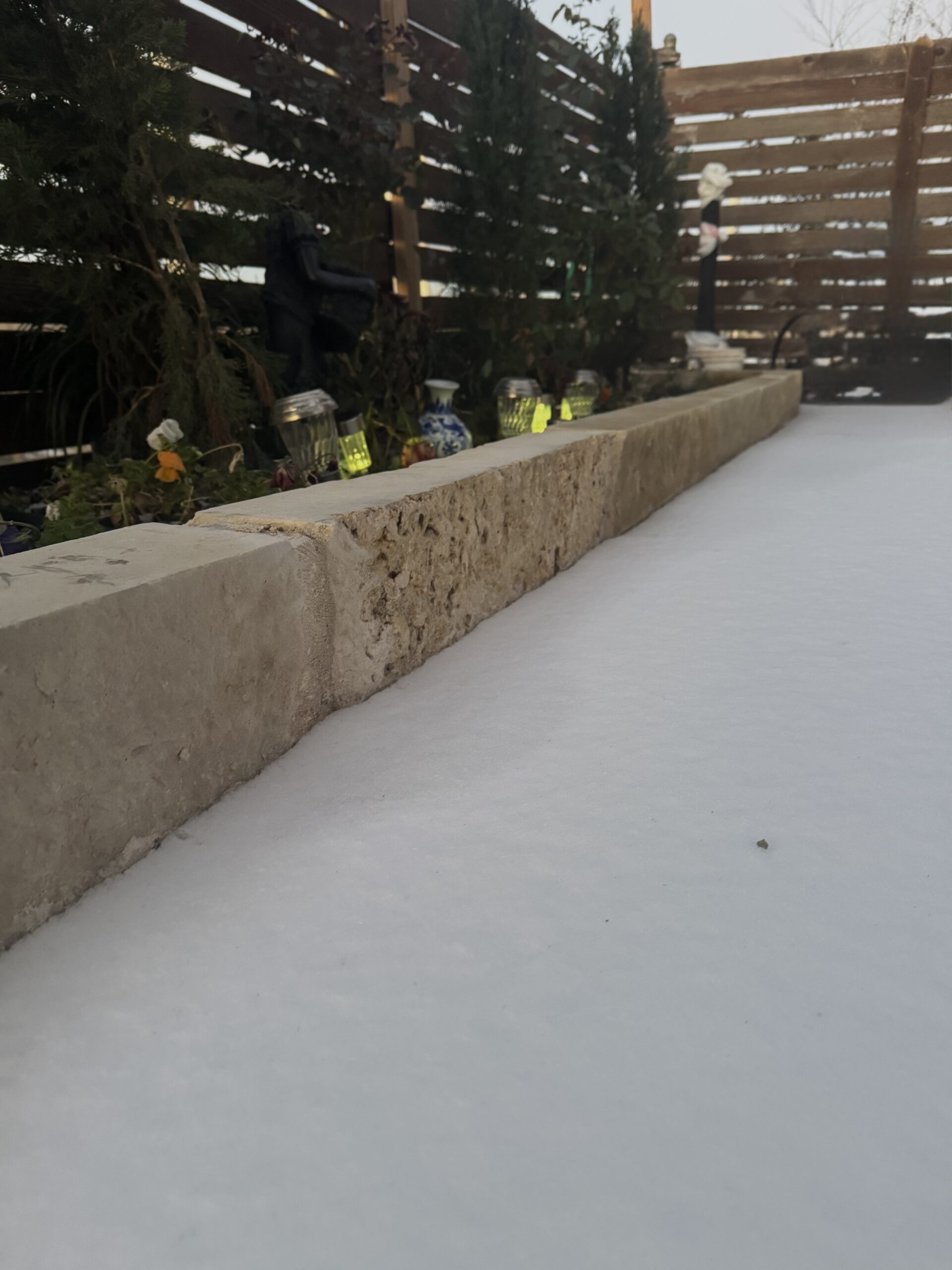
The weekend of January 24 & 26, 2026 delivered something most Ellis County homeowners were not prepared for. A winter storm covered North Texas with ice, sleet, and snow, with temperatures dropping into the single digits and wind chills plunging below zero. Dallas Fort Worth International Airport recorded 58 consecutive hours below freezing, with some areas seeing 2 to 3 inches of sleet accumulation and overnight lows hitting 9 degrees, breaking temperature records that stood for decades.
This was not just another cold front. The 2026 ice storm made thousands of homeowners ask the same question as they looked out at their brown, wilted landscapes: Is my landscape dead, or is it just dormant?
That question matters more than you might think. The way you respond the weeks after a major freeze can determine whether your landscape bounces back or whether you end up having to replace thousands of dollars worth of plants that might have survived. More importantly, this storm changed how Ellis County homeowners think about landscaping. The days of planting whatever looks good at the garden center are over. Now, resilience matters as much as the landscape appearance.
Is Your Ellis County Landscape Dead or Dormant?
After a freeze like this, patience is not optional. It is the most important tool you have. Most plants will not show their true condition for weeks, and some will not fully reveal themselves until mid spring. Digging up or cutting back plants too early is one of the biggest mistakes homeowners make after a hard freeze.
The first thing to understand is that many plants go dormant in winter. Dormancy is a natural survival mechanism. It is not death. When temperatures drop, deciduous perennials and many shrubs shut down their top growth and store energy in their roots. They will look lifeless above ground, but the root system is still very much alive, waiting for warmer weather to trigger new growth.
Even plants that are not supposed to go fully dormant can look dead after extreme cold. Evergreens may turn brown. Stems may look brittle. Leaves may wilt or drop. None of these signs guarantee the plant is gone. What matters is what is happening below the surface.
How to Test if Your Plants Are Still Alive
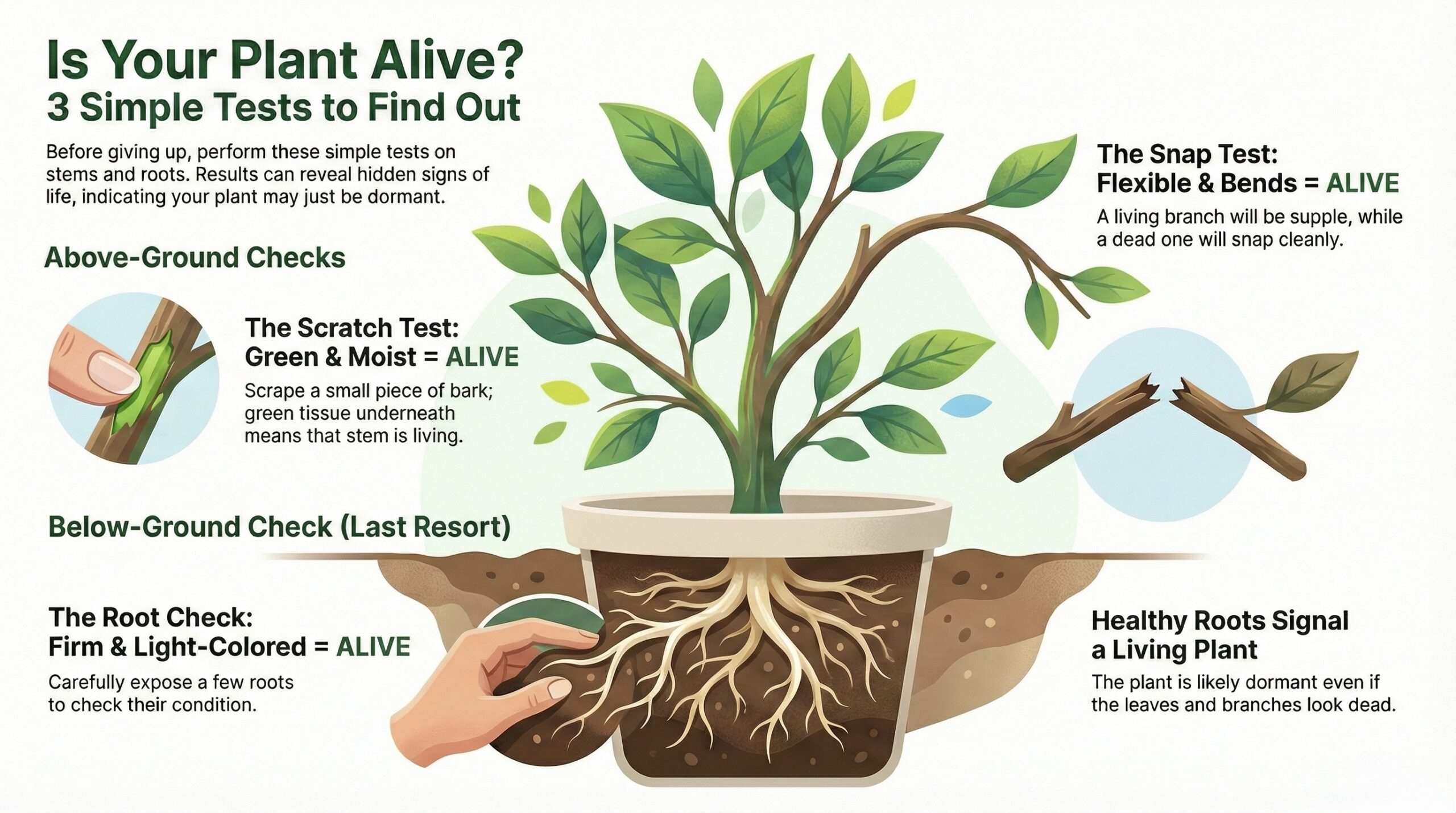
There are three simple tests you can use to check whether a plant has survived. These tests work for woody shrubs, perennials, and even small trees. You do not need to be an expert to do them.
1 The scratch test: Use your fingernail or a small knife to lightly scratch the bark or outer layer of a stem. If you see green, moist tissue underneath, the plant is alive. If the tissue is brown and dry, that section is dead. Start near the tips of branches and work your way down. Even if the tips are dead, the plant may still be alive further down the stem.
2 The snap test: Gently try to bend a small branch or stem. If it snaps cleanly and looks dried out inside with a dark brown or black color, that section is dead. If the branch bends and reveals a hint of green or white inside when it cracks, it is still alive. Be careful with this test. If you snap too many live branches, you can weaken the plant or create entry points for disease.
3 The root check: This test is more invasive, so only use it if you are seriously concerned. Carefully dig around the base of the plant to expose some of the roots. Healthy, living roots will be light colored, firm, and supple. Dead roots will be mushy, brittle, black, or will smell foul. If the roots are healthy, the plant is likely dormant, even if everything above ground looks terrible.
If you are still not sure after these tests, wait. Many plants that look completely dead in February will show new growth in April. Give them until late spring before you make any final decisions.
What Not to Do After a Freeze
The urge to clean up is strong after a storm like this. Dead leaves, brown stems, and wilted branches make the yard look terrible. But acting too quickly can do more harm than good.
Do not prune yet: Even if parts of the plant are clearly dead, leave them alone for now. Those dead leaves and stems are still providing some protection for the living tissue underneath. Pruning too early can expose the plant to another round of cold weather or trigger new growth that will be vulnerable to a late frost. Wait until you see new growth emerging in spring. That tells you the plant is awake and ready to recover. At that point, you can safely remove the dead material.
Do not fertilize: Fertilizing a stressed or dormant plant can do more harm than good. It can push the plant to grow too early, wasting energy it needs for root recovery. It can also burn already damaged roots. Wait until temperatures are consistently above 50 degrees during the day and new growth is visible before you add any fertilizer.
Do not overwater: Dormant plants need very little water. Overwatering during dormancy can lead to root rot, which will kill a plant that might have otherwise survived. Check the soil before watering. If it is damp an inch below the surface, leave it alone.
Do not give up on evergreens: Just because an evergreen plant turned brown does not mean it is dead. Many evergreens experience something called winterburn, where the foliage dies but the plant itself survives. The roots may still be healthy, and the plant may push out new growth from the base or inner branches come spring.
What You Should Do Right Now
While you wait for your plants to wake up, there are a few things you can do to support recovery.
Add mulch: A 3 to 4 inch layer of mulch around the base of shrubs and perennials helps insulate the roots and protects them from any additional cold snaps. It also helps retain moisture as the weather starts to warm up. Use organic mulch like shredded bark or compost. Avoid piling mulch directly against the stems or trunk of the plant.
Water sparingly: If we go several weeks without rain, give your plants a deep soak. Focus on the root zone, not the foliage. Once every 3 to 4 weeks is usually enough during dormancy.
Wait and observe: This is the hardest step, but it is also the most important. Give your plants time. Mark the ones you are concerned about and check them every few weeks. Take notes or photos so you can track any changes. By mid to late April, you should have a much clearer picture of what survived and what did not.
10 Plants That Survive the Winter and What to Plant Next
The 2026 ice storm is going to change the way Ellis County homeowners think about plant selection. The question is no longer just "Does it look good?" The new question is "Will it survive the next freeze?"
If you are replacing plants or adding to your landscape, choose varieties that are cold hardy to at least USDA Zone 7 or lower. Ellis County falls into Zone 8a, where average winter lows range from 10 to 15 degrees. The 2026 storm pushed some areas into single digits, which means plants rated only for Zone 8 may not be reliable anymore. To be safe, choose plants rated for Zone 7 or colder.
Here are 10 plants that can handle North Texas winters, including extreme cold events like the 2026 ice storm.
1. Holly (Ilex species): Hollies are some of the most reliable cold tolerant shrubs for North Texas. They can survive temperatures down to 0 degrees and tolerate both full sun and full shade. Evergreen varieties like Needlepoint Holly and Possumhaw Holly provide year round beauty. Possumhaw strain is especially striking in winter, when it displays bright red berries on bare gray stems.
2. Boxwood (Buxus species): Boxwood is another hardy evergreen shrub that tolerates cold well. It is slow growing however it maintains a neat, formal appearance with minimal pruning. Boxwoods can handle temperatures well below zero and work well as foundation plantings or hedges.
3.Autumn Sage: This Texas native is both drought tolerant and cold tolerant. It can be evergreen in mild winters and produces colorful blooms from spring through fall. Autumn Sage thrives in full sun and requires very little water once established.
4. Texas Sage : Cenizo is a Texas native that is extremely tough. It is drought tolerant, cold-tolerant, and evergreen. After rains, it produces stunning purple or pink blooms. This plant can handle both the heat of summer and the cold of winter with no issues.
5. Abelia : Abelia is a fantastic choice for a winterhardy shrub. Most varieties tolerate temperatures down to minus 5 degrees. Abelia Kaleidoscope is especially eye catching, with foliage that shifts from yellow green in spring and summer to orange and burgundy in fall and winter.
6. Red Yucca: Famous for being virtually indestructible. Despite its delicate appearance, this Texas native is cold hardy down to -20°F and can withstand the heaviest ice coatings without breaking or dying back. While it features striking, fountain like evergreen foliage that turns a beautiful plum bronze in winter, its real beauty is shown when towering 5-foot flower spikes that attract hummingbirds all summer long. Perfect for our heavy clay soils and unpredictable deep freezes.
7.Lonicera fragrantissima: Winter Honeysuckle is a shrub that truly shines in the cold months. It produces creamy white flowers with a sweet, musky fragrance in winter, even when temperatures are frigid. It can grow up to 10 feet tall and can be shaped as a shrub or trained into a small tree.
8. Lindheimer's Muhly: This native ornamental grass is evergreen, drought-tolerant, and cold tolerant. It produces airy seed heads in late summer and early fall and requires almost no maintenance. It can tolerate both full sun and part shade.
9. Flame Acanthus : This deciduous Texas native is both drought and cold tolerant. It produces tubular flowers that attract hummingbirds and other pollinators. Flame Acanthus is a tough plant that requires very little care once established.
10. Yaupon Holly : Yaupon is a native evergreen holly that is extremely adaptable. It can be grown as a small tree or large shrub, and it tolerates a wide range of soil and light conditions. It is also highly drought tolerant and cold hardy. The red berries are a favorite of birds in winter.
These plants are not just resilient. They are proven performers in the Ellis County climate. They handle heat, drought, and extreme cold. If you are rebuilding or redesigning your landscape after the 2026 storm, these are the plants you want on your property.
Why This Storm Matters for the Future
The 2026 ice storm was a wake up call. It reminded Ellis County homeowners that North Texas weather is unpredictable. Mild winters can turn severe with little warning. Plants that seemed perfectly fine for years can be wiped out in a single weekend.
The lesson is not to avoid planting. It is to plant smarter. Choose plants that are adapted to this region. Choose plants that have evolved to handle both the 100 degree summers and the occasional single digit winter night. Choose plants that will not need to be replaced every time the weather does something unexpected.
This is not about giving up tropical plants or colorful annuals. It is about building a backbone of resilient, cold hardy plants that will survive no matter what. You can still add seasonal color and interest with annuals and tender perennials. But the foundation of your landscape, the shrubs and perennials that provide structure and year round presence, should be tough enough to handle anything.
Working with a Professional After the Storm
If you are unsure what to do with your landscape after the freeze, a local professional can help. A landscaper who knows Ellis County can assess your property, identify which plants are likely to recover, and help you make a plan for replacement or redesign.
The storm changed everything. But it also created an opportunity to build a landscape that is tougher, smarter, and better suited to the reality of North Texas weather. That is a landscape worth investing in.
At Son's Maintenance, we have been helping homeowners throughout Ellis County recover from weather events and build landscapes that last. We understand the local climate, the soil conditions, and the plants that thrive here. If your landscape was damaged by the 2026 ice storm, we can help you figure out what comes next.
Sources
- Texas A&M AgriLife Extension: Freeze Damage to Landscape Plants
- University of Illinois Extension: How to Tell if a Plant is Dead or Dormant
- Oklahoma State University Extension: Cold Injury to Landscape Plants
- Lady Bird Johnson Wildflower Center: Native Plants of Texas - North Central Region
- Native Plant Society of Texas: Recommended Plants for North Central Texas
- Joshua Tree Experts: Signs of Winter Plant Damage
Need help recovering your landscape after the ice storm?
Contact Us